Adaptive Team Consulting · How We Excel
People think differently. That can strengthen the work.
How We Excel helps people, teams, leaders, and partners make different ways of seeing, evaluating, deciding, and acting visible and useful—while giving complex shared work enough structure to move from need to sustainable use.
Different contributions become more useful when the work can reach them.
How We Excel combines human difference with practical structure so groups can see more, decide more deliberately, and build solutions people can actually use.
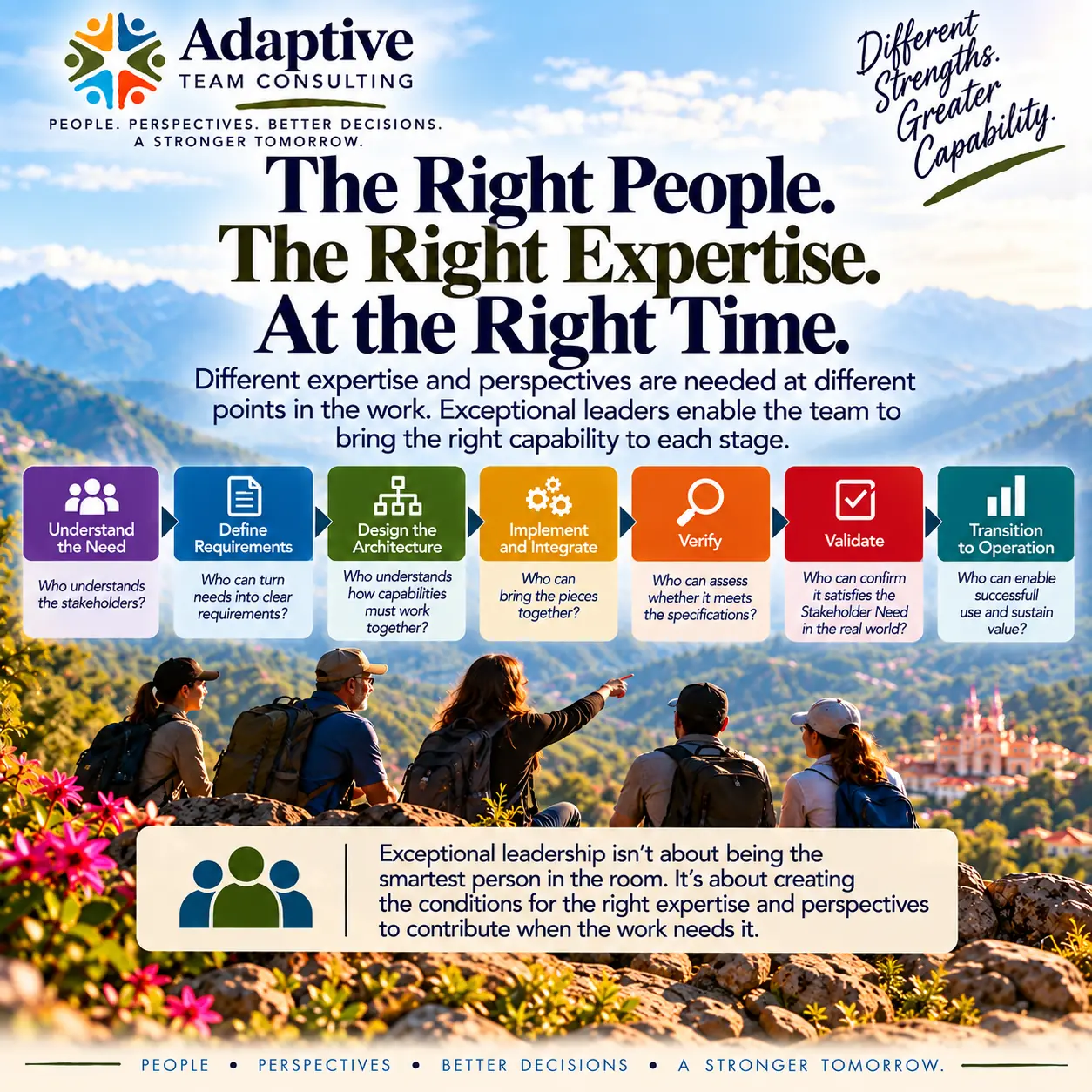
See more of the situation
No one has to hold the whole system alone. Stakeholder knowledge, lived experience, authority, and expertise can be brought into the work deliberately.
Use different ways of thinking
The goal is not to make everyone think alike. It is to make different cognitive contributions visible, accessible, and useful at the right moment.
Structure complex work
Needs, requirements, functions, decisions, evidence, and responsibilities become easier to navigate when the work is made visible.
Build for intended use
Better solutions stay connected to the people affected by them—from the first definition of need through validation, transition, and learning.
What brings you here?
Choose the doorway that feels most useful. You do not need to learn the full architecture before taking a practical next step.
See how you tend to approach shared work.
CAP-5 makes preferred cognitive approaches easier to name and discuss. It is a five-question, guest-first assessment that takes about two minutes. No account is required, and responses stay in your browser session by default.
Directional pairs + separate engagement visibility
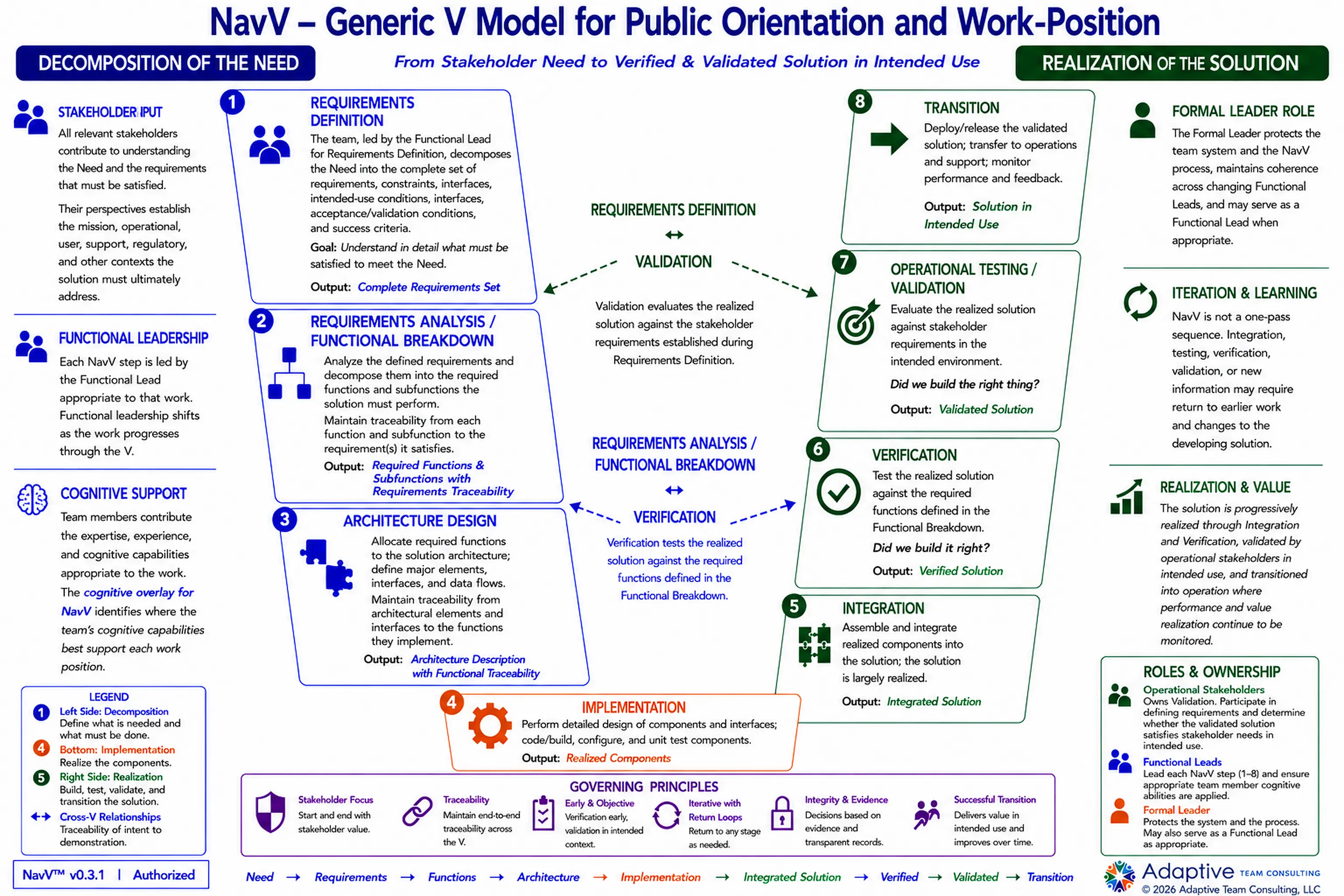
Keep the work connected from stakeholder need to intended use.
NavV gives teams a shared navigation model for requirements, functions, architecture, implementation, integration, verification, validation, transition, and learning.
Start with what is ready.
Available resources come first. Work still in development is separated into a smaller roadmap so you can tell what is usable now.
CAP-5 Self-Assessment
Five questions that make preferred cognitive-approach patterns easier to see and discuss.
Take CAP-5Response Fit Check
Four reflection questions for matching the response to what can be known, learned, stabilized, and safely committed.
Use the checkNavV Public Orientation
A visual reference for moving from stakeholder need through validated solution and transition.
Open the graphic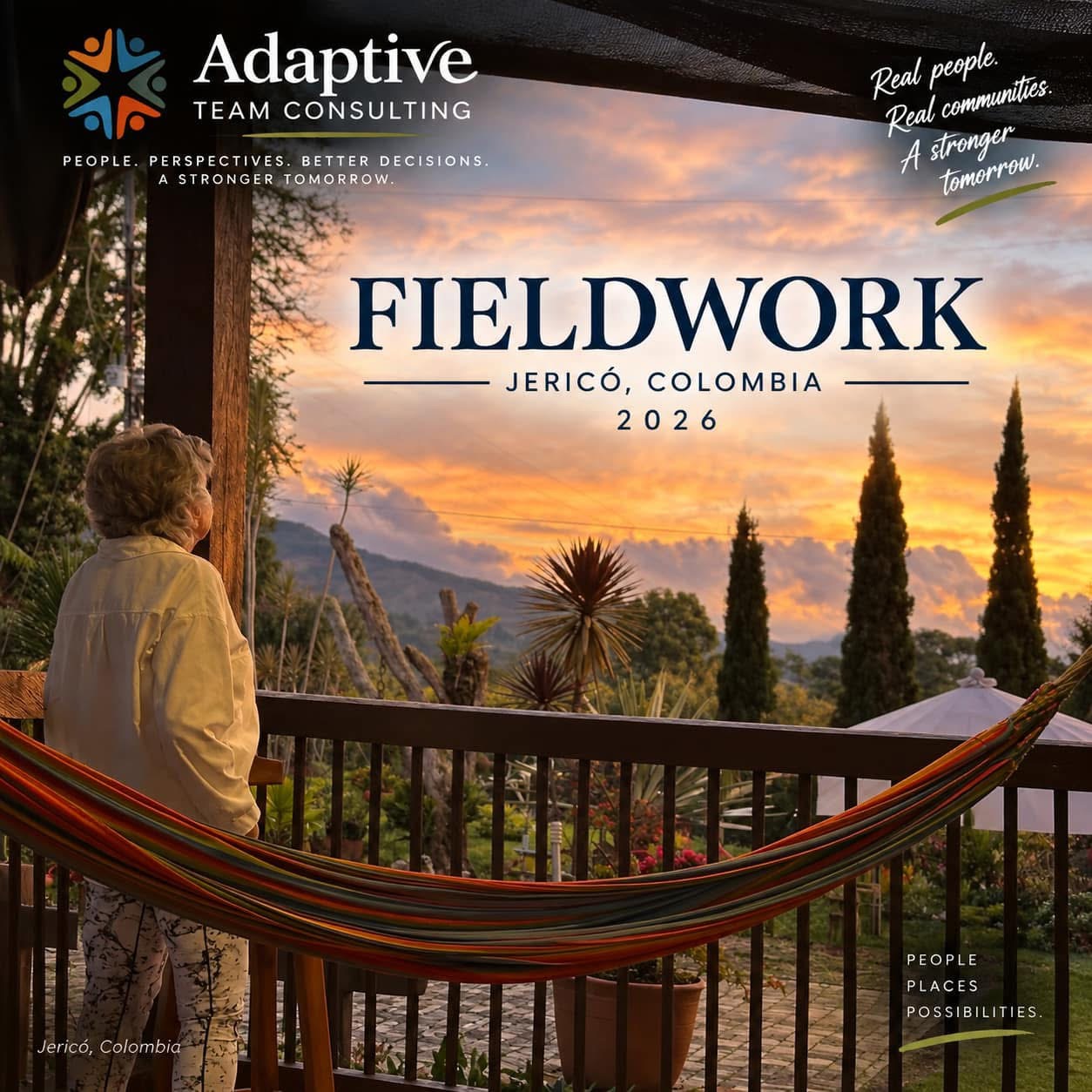
Ideas become useful when they meet real conditions.
ATC’s field observation asks how people build belonging, solve problems, coordinate responsibility, and sustain community across different environments. These observations inform questions and design choices; they are not presented as proof or validation by themselves.
Explore fieldworkBuilt from a lifetime of working in complex systems.
Military operations. Engineering and program management. Higher education. Research. Community fieldwork.
Across very different environments, one question kept appearing: How do capable people with different expertise, experiences, responsibilities, and ways of thinking work well together when the answer is not obvious?
How We Excel grew from that question.
Meet the founder and the work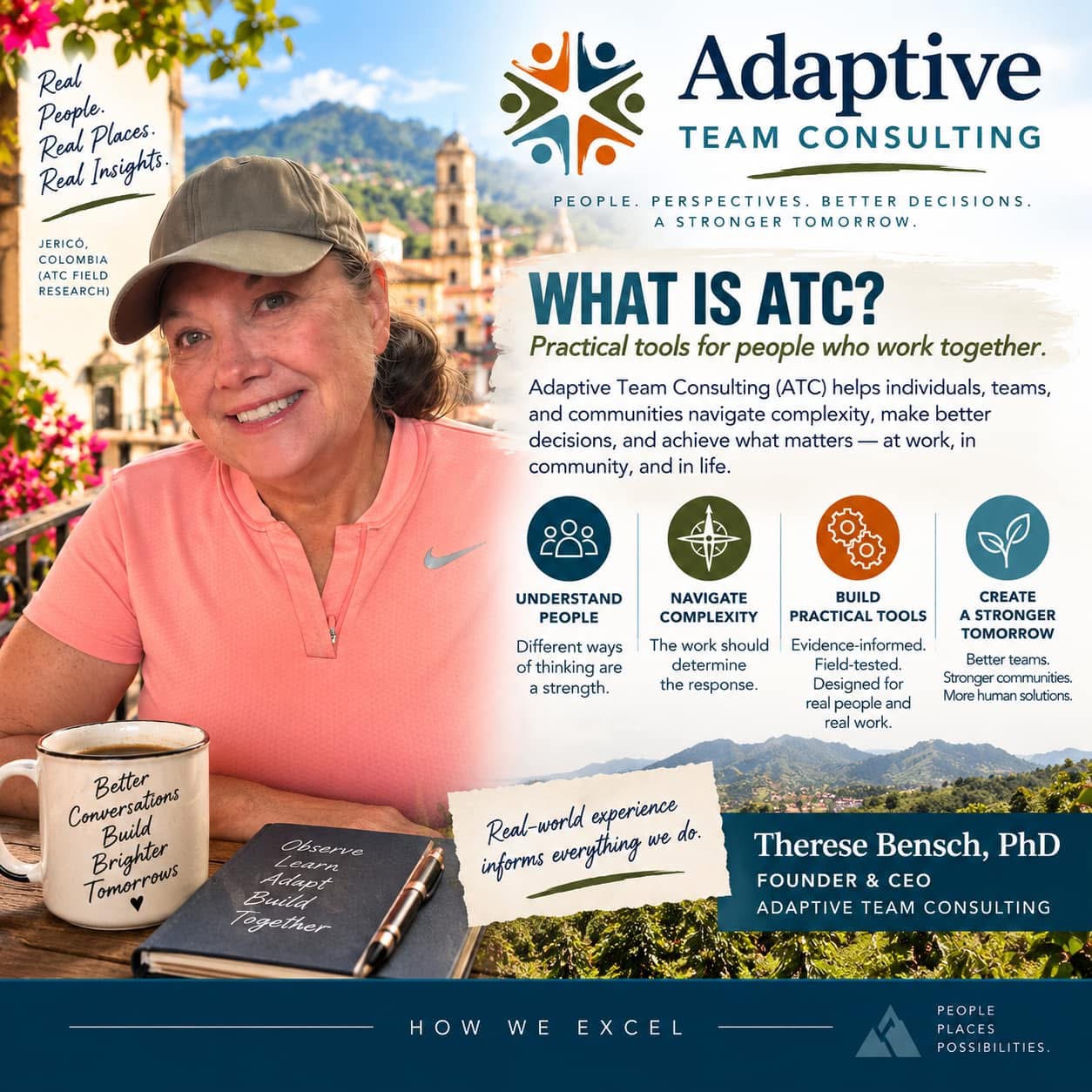
New tools are released when they are ready.
Receive occasional updates about research participation, developmental testing, and newly available resources. No sales sequence.
Join the Updates List